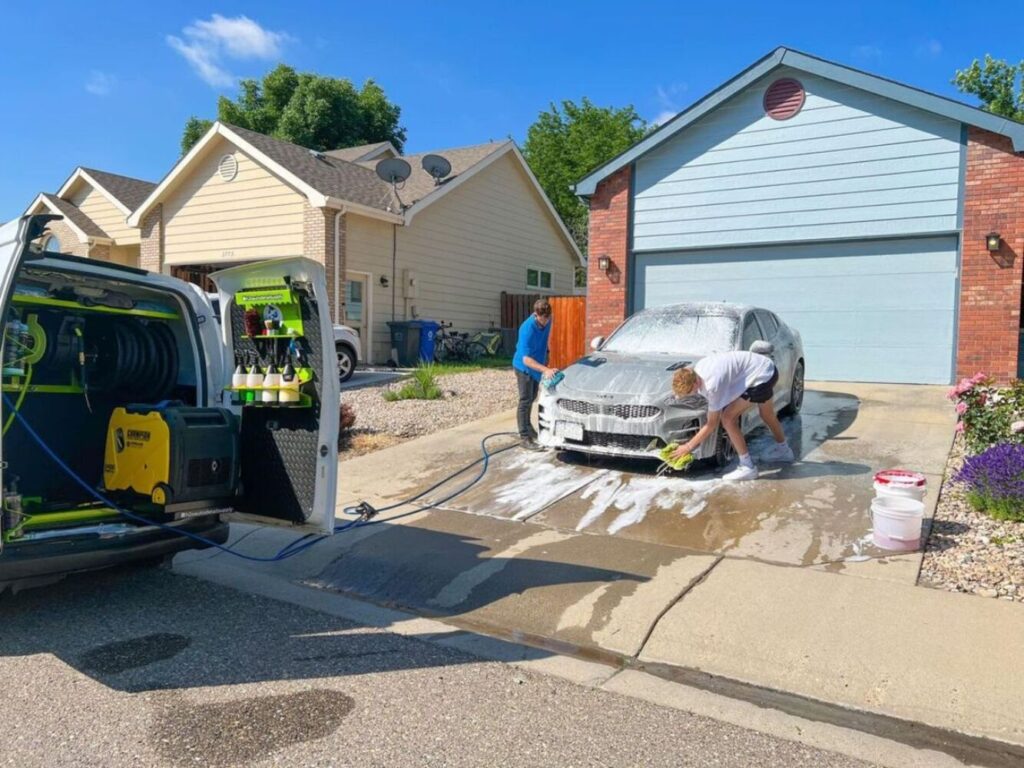

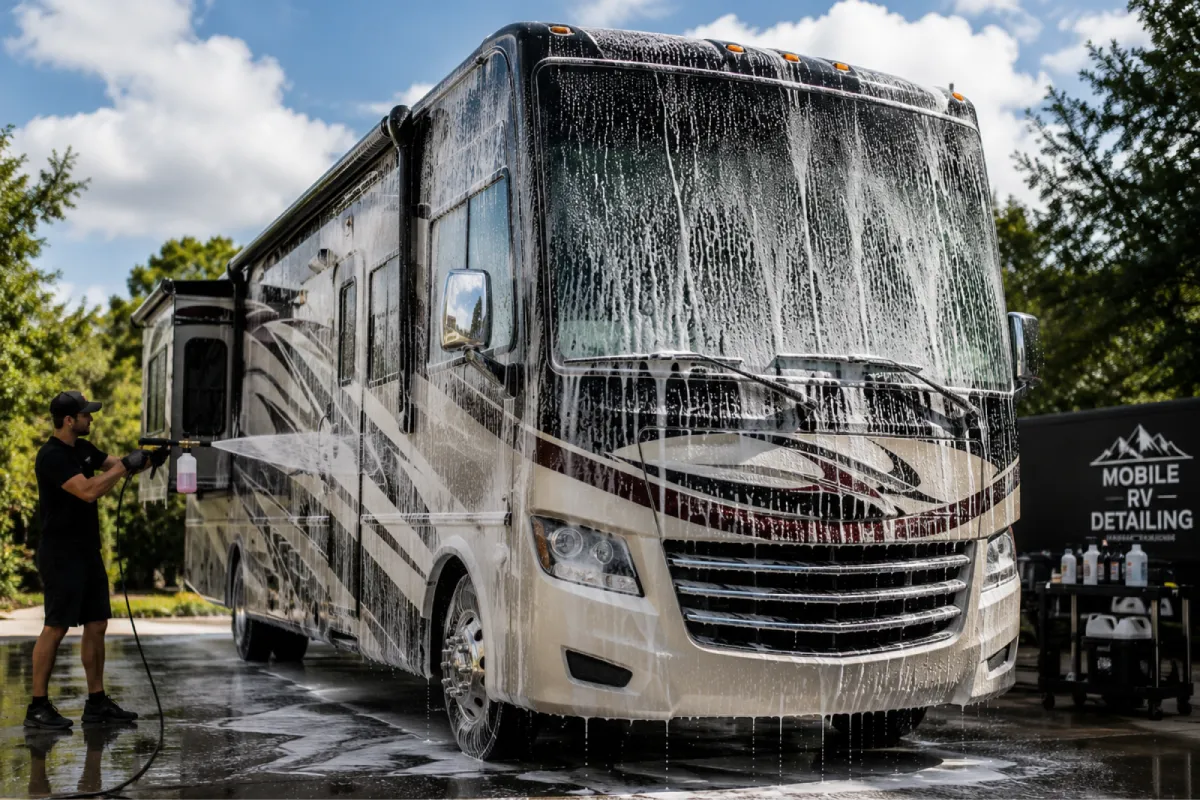

An RV should be professionally detailed two to four times per year, depending on how often you travel, your storage setup, and the regional weather conditions your vehicle faces. At a minimum, comprehensive detailing must be scheduled before entering winter storage and immediately after the spring road season ends to prevent oxidation, seal degradation, and paint damage. This regular frequency preserves the exterior laminates and safeguards your financial investment from accelerated depreciation.
Technical Maintenance Metrics and RV Protective Coatings
To understand why a regular scheduling frequency is necessary, owners must evaluate the specific physical attributes and technical metrics used during a professional detailing protocol. An RV is not simply a large car; it is a complex combination of fiberglass gelcoats, aluminum, rubber membranes, and intricate sealing joints that require specialized material knowledge.
- Gelcoat Thickness: The thin, protective outermost layer of resin applied over fiberglass RV bodies, measuring roughly 15 to 25 mils. This layer requires delicate mechanical polishing to avoid burn-through.
- UV Barrier Longevity: The operational lifespan of polymer sealants or ceramic coatings exposed to direct sunlight, dictating how long the surface remains shielded from oxidation before requiring reapplication.
- Seal Elasticity Rating: The flexibility coefficient of rubber slide-out gaskets and roof lap sealants. Regular conditioning prevents drying, cracking, and water intrusion.
- Total Dissolved Solids (TDS) Resistance: The ability of a paint protection barrier to prevent hard water minerals and road salt from etching into the exterior graphics.
Understanding these metrics allows us to design an exact maintenance schedule tailored to your coach. For example, during a recent audit for an owner in Longmont who frequently travels through dusty mountain passes, we measured severe surface contamination that was actively accelerating gelcoat degradation. By evaluating the baseline gelcoat thickness, our team can determine exactly how much mechanical correction is safe to execute to maintain that showroom finish without compromising the underlying fiberglass.
Chronological Wear Cycle: The Structural Impact of Neglected RV Maintenance
When an RV is left exposed to environmental elements without routine surface decontamination and protection, structural materials degrade in a highly predictable, cumulative sequence. Left unmanaged, minor surface issues quickly compound into major structural failures.
- The Surface Contamination Phase
Microscopic road grime, industrial fallout, bug splatter, and bird droppings bond directly to the gelcoat or clear coat, initiating chemical etching on the roof and front cap.
- The Solar Oxidation Phase
Unprotected UV radiation breaks down the outer resin layers, causing a chalky white residue to form, fading vinyl graphics, and drawing essential oils out of rubber roof membranes.
- The Seal Degradation Phase
Dryness and grime buildup cause slide-out seals, window caulking, and roof lap sealants to turn brittle, crack, and lose their watertight properties.
- The Structural Failure Phase
Moisture penetrates degraded seals during storage, leading to hidden sidewall delamination, interior mold development, and expensive structural wood rot.
We routinely witness this exact timeline when local owners bring their coaches to us after extended storage periods. A vehicle left sitting unprotected in Loveland will experience significant UV degradation and environmental etching within just one season. By intercepting this cycle during the first three months, you completely avoid the brittle seal failures and chalky oxidation that ruin your vehicle’s appearance and market value.
Climate and Usage Matrix: Determining Your Exact Detailing Frequency
Not every RV depreciates at the same rate. Storage methods, travel mileage, and regional climates dictate whether a vehicle requires standard biannual care or an aggressive quarterly maintenance plan. We believe in providing clear communication at every step, recommending what makes sense for you based on how you use your vehicle and your unique driving habits.
| Environmental & Usage Profile | Recommended Detailing Frequency | Primary Protective Focus |
| Full-Time Travel / High UV Exposure | 4 Times per Year (Quarterly) | Intensive UV block, rigorous road film decontamination, and multi-stage bug acid removal. |
| Part-Time Use / Outdoor Covered Storage | 3 Times per Year | Seasonal wash-downs, polymer sealant top-ups, and thorough roof lap seal inspection. |
| Occasional Use / Climate-Controlled Storage | 2 Times per Year (Biannual) | Pre-storage deep clean, storage prep preservation, and post-storage rehydration. |
| Severe Winter / Road Salt Exposure | Post-Trip Immediate Decontamination | Undercarriage salt neutralization, wheel-well flushing, and slide-out mechanical clearing. |
For clients utilizing our specialized services for Greeley, CO, RV detailing, we analyze these specific environmental factors during your initial inspection. An RV parked outdoors in Fort Collins faces vastly different environmental stress than one kept in a fully enclosed facility. By mapping out your travel calendar, we establish an intentional maintenance schedule that guarantees continuous long-term protection.
Debunking the Myth: “A Standard Automated Car Wash and Quick Spray Wax Are Enough to Protect an RV Exterior”
Many RV owners believe a quick wash and spray wax provide enough protection. In reality, automated washes often use harsh brushes and strong detergents that can scratch surfaces, strip away protection, and damage decals, gelcoat, and rubber components.
Professional goes far beyond basic cleaning. A multi-step wash, decontamination process, and premium sealant or ceramic protection help defend your RV against UV rays, oxidation, road grime, and environmental contaminants. The result is longer-lasting protection, improved appearance, and better preservation of your RV’s exterior.
Our Multi-Stage Preservation Framework
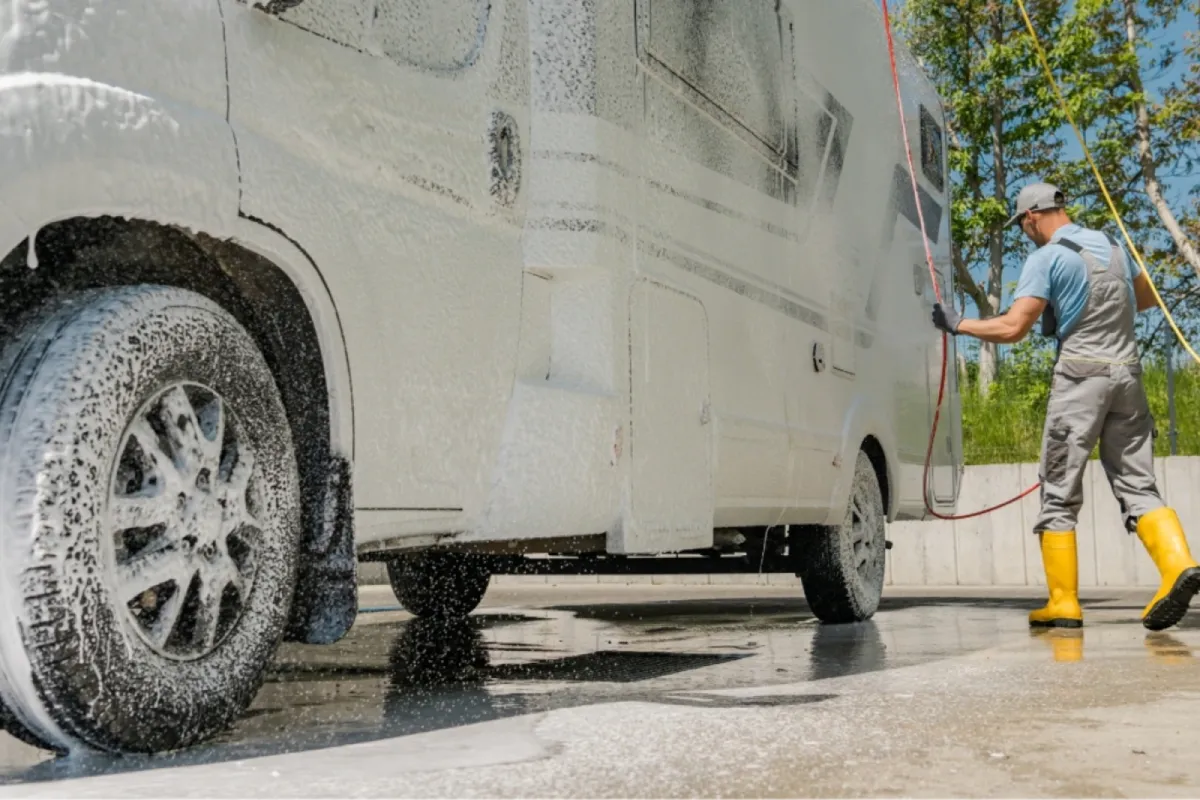
Protecting your RV requires more than a basic wash; it demands a structured process designed for long-term performance. Our RV detailing in Greeley, CO, service follows a proven multi-stage approach that helps preserve your RV’s appearance, protect its surfaces, and prepare it for every trip or storage season.
We begin with an exterior wash and oxidation removal to safely eliminate road grime, oxidation, bug residue, and environmental contaminants while restoring gloss to your RV’s finish. Next, our RV detailing, built for long trips, storage, and lasting care, applies premium protective products that help defend your paint, decals, and gelcoat from UV exposure, dirt, and weather-related wear.
Inside, we perform an interior deep clean and sanitization to remove embedded dirt, odors, allergens, and bacteria, creating a cleaner and more comfortable living space. We complete the process by inspecting and conditioning the roof, awnings, slide-outs, and seals, helping protect vulnerable components from moisture intrusion and extending the life of your RV. With this comprehensive approach, your coach stays cleaner, better protected, and ready for every adventure.
Professional Care for Local RV Owners
At AutoGlow Detailing, we approach vehicle care with calm confidence, operating as an authoritative, consultative advisor rather than a high-pressure sales shop. We know that high-end trucks, new travel trailers, and luxury motorhomes require meticulous, intentional care to maintain that showroom finish.
If you are looking for premier RV detailing in Greeley or expert support across the surrounding areas, we are here to help guide your decisions. For example, when executing high-end projects, our team ensures every inch of the vehicle, from the front cap to the rear bumper, is treated under strict professional standards. We treat our clients as long-term partners, ensuring your recreational asset remains structurally pristine for years to come.
Protect Your Adventure and Secure Your Investment
At AutoGlow Detailing, we help high-end vehicle owners protect and maintain their investment through long-term, expertly guided solutions, not one-time services. We deliver advanced protection and maintenance solutions designed to keep high-value vehicles looking flawless while preserving their long-term value, because appearance is what you see, but protection is what makes it last. We don’t believe in one-time services; we build long-term relationships as a trusted partner in protecting our clients’ vehicles.
Based on how you drive and what you’re looking to protect, contact us today to schedule an intentional, zero-pressure consultation for your vehicle.
Frequently Asked Questions
What happens if I store my RV for winter without getting it professionally detailed first?
Leaving road grime, bird droppings, and industrial fallout on your RV during winter storage allows these acidic materials to permanently etch into the clear coat and graphics over months of sitting stagnant. Additionally, moisture trapped within dirty surface layers can go through freeze-thaw cycles, accelerating seal failure and causing fine cracks in the gelcoat.
How does professional detailing protect the rubber roof membrane found on most RVs?
Professional detailing involves using specialized low-pH, petroleum-free cleansers that safely lift mold, mildew, and black streaks without breaking down the roof’s structural integrity. Following the wash, a dedicated UV-blocking roof treatment is applied to keep the rubber pliable, preventing the chalking, drying, and cracking that lead to catastrophic interior water leaks.
Does a ceramic coating change how often my RV needs to be professionally detailed?
A ceramic coating provides superior UV defense and a highly hydrophobic surface, which prevents contaminants from bonding easily. However, it does not eliminate the need for professional care. While it extends your polishing intervals, the RV still requires routine professional decontamination washes to safely clear road film accumulation without degrading the coating.
Why is interior detailing so important prior to placing an RV into long-term storage?
Deep interior cleaning removes hidden food crumbs, organic spills, and airborne moisture that inevitably attract pests, insects, and rodents while the coach is sealed. It also optimizes cleanliness by sanitizing the climate control vents and porous materials, stopping the spread of mold and mildew spores in enclosed, unventilated spaces.